Yoga Leggings Manufacturer: What Activewear Brands Should Know Before Production
A yoga leggings manufacturer can directly influence product quality, customer satisfaction, and long-term brand growth.
In today’s activewear market, leggings are often the best-selling product category. Many successful brands generate a significant portion of their revenue from leggings because consumers wear them not only for yoga but also for gym training, travel, running, and daily activities.
However, creating premium leggings requires more than selecting a fabric and adding a logo. Understanding product development and manufacturing processes can help brands avoid costly mistakes.
Why Yoga Leggings Remain One of the Strongest Activewear Categories
The activewear market continues to grow globally, and leggings remain at the center of this growth.
Consumers choose leggings because they offer:
- Comfort
- Flexibility
- Performance
- Versatility
- Modern Styling
Many brands launch leggings first because they have consistent demand throughout the year and appeal to a broad customer base.
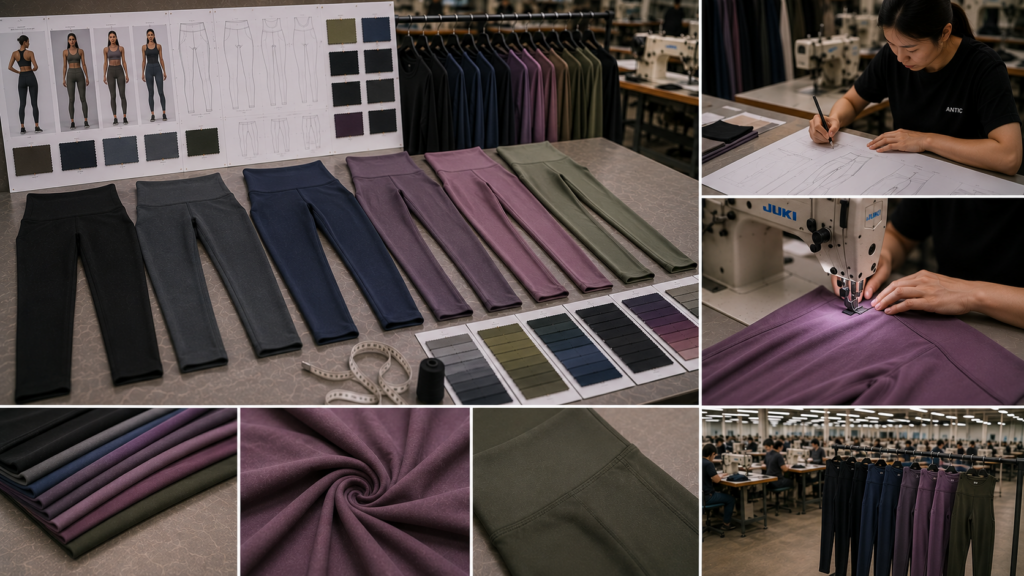
Fabric Selection Matters More Than Most Brands Realize
Fabric quality is one of the biggest factors affecting customer satisfaction.
Popular fabric options include:
- Nylon Spandex
- Polyester Spandex
- Recycled Performance Fabrics
- Seamless Knit Fabrics
In premium activewear collections, nylon-spandex blends are often preferred because they provide a softer hand feel, better stretch recovery, and improved durability.
Many successful brands use fabrics containing between 20% and 30% spandex to achieve better performance and comfort.
Understanding Compression and Stretch Recovery
Consumers expect leggings to maintain their shape after repeated use.
Two important factors are:
- Compression
- Stretch Recovery
Poor-quality fabrics may lose elasticity after washing, causing products to feel loose and less supportive.
Professional manufacturers test stretch recovery before production to reduce this risk.
Why Waistband Construction Is Critical
Many customer complaints involve waistband performance.
Common problems include:
- Rolling Waistbands
- Slipping During Exercise
- Uneven Compression
- Poor Stitch Durability
Well-designed waistbands improve comfort and significantly increase customer satisfaction.
This is one reason premium activewear brands spend considerable time testing waistband construction during development.
Common Sampling Problems
Most production issues appear during sampling.
Typical examples include:
- Fabric Transparency
- Incorrect Sizing
- Uneven Stitching
- Poor Stretch Recovery
- Waistband Problems
Approving a production sample before bulk manufacturing helps identify these issues early.
MOQ Requirements
Most yoga leggings manufacturers offer:
- 50 Pieces
- 100 Pieces
- 300 Pieces
Low MOQ production is useful for startup brands that want to test new products without excessive inventory risk.
However, larger orders often provide better fabric options and lower unit costs.
How Buyers Evaluate Manufacturers
Experienced buyers typically focus on:
- Fabric Quality
- Product Consistency
- Development Support
- Communication Speed
- Quality Control Systems
- Production Capacity
Manufacturers that provide reliable communication and consistent quality usually create greater long-term value than suppliers focused only on price.
Production Timeline
Most leggings projects follow this schedule:
- Sample Development: 7–15 Days
- Bulk Production: 15–25 Days
- Shipping: 5–35 Days
Planning ahead helps brands avoid delays during product launches.
Why Long-Term Manufacturing Partnerships Matter
Many successful activewear brands work with the same manufacturer for years.
Long-term relationships often result in:
- Better Product Consistency
- Faster Development
- Improved Communication
- Better Cost Control
- Greater Production Efficiency
As the partnership grows, manufacturers gain a deeper understanding of brand requirements and quality expectations.
Conclusion
Choosing the right yoga leggings manufacturer requires careful evaluation of fabric quality, development capabilities, quality control standards, and production experience.
A reliable manufacturing partner can help brands reduce risks, improve customer satisfaction, and support long-term growth.
Looking for a Yoga Leggings Manufacturer?
Ludika specializes in yoga leggings, sports bras, matching sets, gym apparel, and premium activewear collections.
✔ Low MOQ Starting From 50–100 Pieces
✔ Premium Performance Fabrics
✔ OEM & ODM Manufacturing
✔ Custom Labels & Packaging
✔ Worldwide Shipping
Contact us today to discuss your next leggings project.