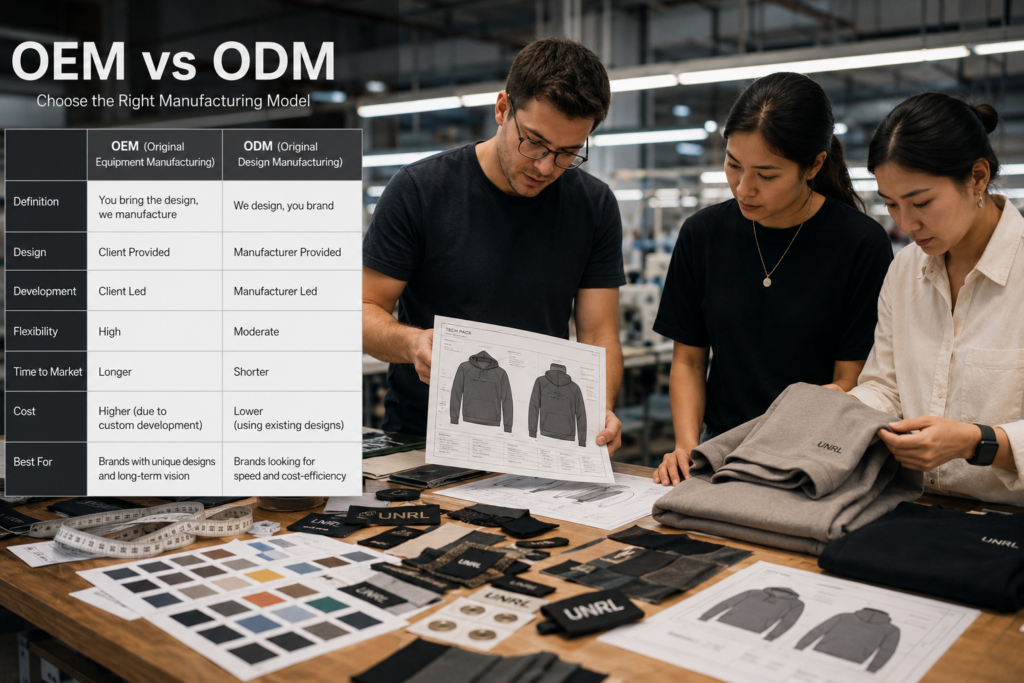
Many apparel brands searching for a manufacturing partner often encounter two common terms: OEM and ODM. Understanding the difference between OEM and ODM clothing manufacturing can help you choose the right production model for your business.
Whether you’re launching a streetwear brand, activewear collection, or private label clothing line, selecting the correct manufacturing approach can save time, reduce costs, and improve product quality.
What Is OEM Clothing Manufacturing?
OEM stands for Original Equipment Manufacturer.
In an OEM model, the brand provides its own designs, specifications, tech packs, measurements, and branding requirements.
The manufacturer produces garments according to the client’s instructions.
OEM is ideal for brands that:
- Have original designs
- Need unique products
- Require custom fabrics
- Want exclusive collections
- Need complete branding control
Most established streetwear brands prefer OEM manufacturing because it allows them to create products that are unique to their market.
What Is ODM Clothing Manufacturing?
ODM stands for Original Design Manufacturer.
In this model, the manufacturer already has existing designs and product templates available.
The client can customize elements such as:
- Logo
- Colors
- Labels
- Packaging
- Printing
- Embroidery
ODM is often faster and more affordable because product development work has already been completed.
ODM works well for:
- Startup brands
- Small businesses
- Fast product launches
- Low-risk market testing
OEM vs ODM: Key Differences
The biggest difference between OEM and ODM is product ownership.
OEM Manufacturing:
- Custom product development
- Full design control
- Unique products
- Longer development time
- Higher flexibility
ODM Manufacturing:
- Existing product designs
- Faster production
- Lower development costs
- Quicker market entry
- Simpler process
Both options can be effective depending on your business goals and budget.
Which Option Is Better for Streetwear Brands?
For most streetwear brands, OEM manufacturing provides greater long-term value.
Streetwear customers often look for:
- Original designs
- Unique fits
- Premium fabrics
- Exclusive collections
OEM allows brands to build stronger identities and create products that stand out from competitors.
However, ODM can be a great starting point for brands that want to test the market before investing in full product development.
Choosing the Right Clothing Manufacturer
Whether you choose OEM or ODM, selecting an experienced manufacturing partner is essential.
Look for a manufacturer that offers:
- Product Development Support
- Sampling Services
- Low MOQ Options
- Quality Control Systems
- Custom Labels & Packaging
- Worldwide Shipping
A reliable manufacturer can help simplify production while maintaining product quality.
For startup brands, ODM manufacturing can be an excellent way to enter the market quickly with lower development costs.
For established brands seeking unique products and stronger brand identity, OEM manufacturing often provides greater flexibility and long-term value.
Many successful apparel businesses begin with ODM products and later transition to OEM manufacturing as their brand grows.
Conclusion
Both OEM and ODM clothing manufacturing offer valuable advantages. OEM is ideal for brands seeking complete customization and unique products, while ODM is perfect for faster launches and lower development costs.
Understanding these differences will help you make better decisions and build a stronger apparel business.
Looking for an OEM & ODM Clothing Manufacturer?
Ludika provides OEM and ODM manufacturing services for streetwear, hoodies, sweatshirts, T-shirts, joggers, activewear, and custom apparel collections.
✔ Low MOQ
✔ Premium Fabrics
✔ Sampling Support
✔ Custom Labels & Packaging
✔ Worldwide Shipping
Contact us today to discuss your next clothing project.