OEM Clothing Manufacturing Process: From Design to Bulk Production
Understanding the OEM clothing manufacturing process helps brands make better decisions when working with apparel factories.
Many new clothing brands have great design ideas but are unfamiliar with what happens after submitting a design to a manufacturer.
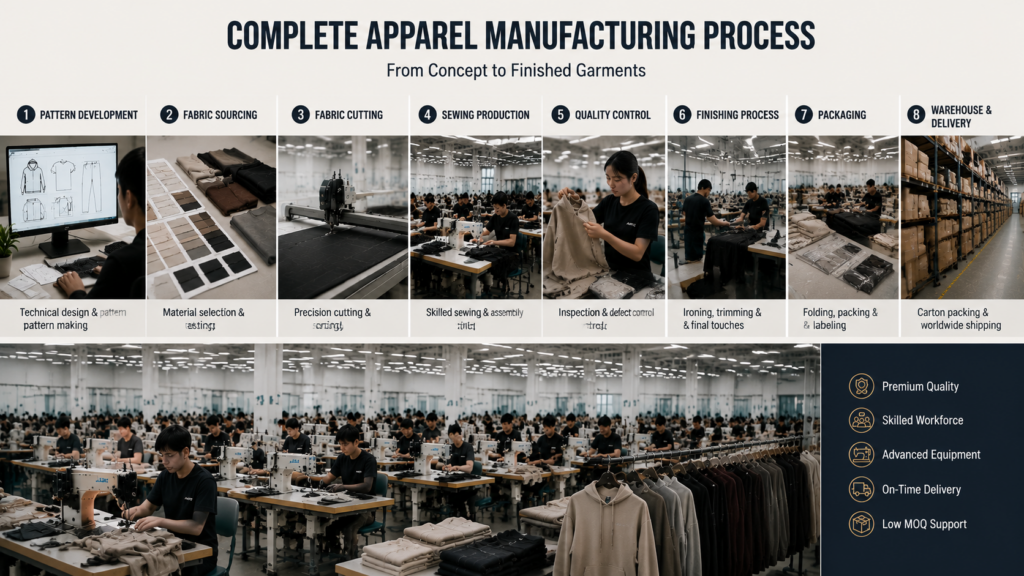
A professional OEM factory does much more than simply produce garments. The process involves product development, fabric selection, sampling, production management, quality control, and final delivery.
This article explains the complete OEM clothing manufacturing process from the first idea to finished products.
Step 1: Design Development and Product Requirements
Every clothing project starts with product information.
Brands usually provide:
- Design Sketches
- Reference Images
- Tech Packs
- Size Charts
- Fabric Requirements
- Logo Artwork
A clear product specification helps manufacturers understand the expected result.
If a brand does not have a complete tech pack, an experienced manufacturer can also provide development suggestions based on the target market.
Step 2: Fabric Selection and Material Development
Fabric selection has a major impact on the final product.
Manufacturers evaluate:
- Fabric Weight (GSM)
- Composition
- Hand Feel
- Durability
- Shrinkage
Different products require different materials.
Examples:
- Heavyweight Hoodies: Cotton Fleece / French Terry
- T-Shirts: Cotton Jersey
- Activewear: Nylon Spandex / Polyester Spandex
Choosing the correct fabric helps improve product quality and customer satisfaction.
Step 3: Pattern Development and Sample Making
Before bulk production, manufacturers create samples for approval.
The sample stage checks:
- Fit
- Measurements
- Fabric Performance
- Construction Details
- Printing or Embroidery
This stage is extremely important because it allows brands to identify problems before large production begins.
Step 4: Sample Review and Adjustments
After receiving samples, brands usually provide feedback.
Common adjustments include:
- Size Changes
- Fit Improvements
- Color Adjustments
- Logo Position Changes
- Fabric Changes
Professional manufacturers use this feedback to create the final approved production version.
Step 5: Bulk Production Preparation
After sample approval, the factory prepares for bulk manufacturing.
Preparation includes:
- Fabric Ordering
- Pattern Confirmation
- Production Scheduling
- Material Inspection
Proper preparation helps ensure smoother production and consistent quality.
Step 6: Cutting and Sewing Production
During production, garments move through multiple stages.
Typical steps include:
- Fabric Cutting
- Sewing Assembly
- Trimming
- Decoration Application
- Finishing
Each stage requires quality control to maintain consistency.
Step 7: Printing and Embroidery
Many brands use decoration techniques to create unique products.
Common methods include:
- Screen Printing
- Puff Printing
- DTG Printing
- Embroidery
- Chenille Patches
The factory checks placement, quality, and durability before final approval.
Step 8: Quality Control Inspection
Quality control is one of the most important parts of OEM manufacturing.
Professional inspections include:
- Fabric Quality Check
- Measurement Check
- Sewing Inspection
- Decoration Review
- Final Product Inspection
A strong QC process helps reduce defective products and protects brand reputation.
Step 9: Packaging and Delivery
After passing quality inspection, products move to final packaging.
Packaging options may include:
- Custom Poly Bags
- Hang Tags
- Woven Labels
- Brand Packaging
After packing, products are prepared for shipment according to customer requirements.
How Long Does OEM Clothing Production Take?
Typical timelines include:
- Sample Development: 7–15 Days
- Bulk Production: 15–25 Days
- Shipping: 5–35 Days
Complex products or special materials may require additional development time.
Why Choosing the Right OEM Partner Matters
A reliable OEM clothing manufacturer provides more than production.
The right partner helps with:
- Product Development
- Technical Support
- Quality Control
- Production Planning
- Long-Term Growth
Strong manufacturing relationships help brands create consistent products and scale their business.
Conclusion
The OEM clothing manufacturing process involves many important stages, from design development and sampling to production and quality inspection.
Understanding this process helps brands communicate better with factories, reduce production risks, and create higher-quality apparel products.
Looking for an OEM Clothing Manufacturer?
Ludika provides OEM manufacturing services for:
✔ Heavyweight Hoodies
✔ Oversized T-Shirts
✔ Crewneck Sweatshirts
✔ Joggers & Shorts
✔ Yoga Wear & Activewear
✔ Custom Labels & Packaging
Contact us today to discuss your next clothing manufacturing project.